Designing modern residential and commercial interiors in India requires surfaces that harmoniously balance visual luxury, acoustic comfort, and rugged everyday durability. SurajWood premium acrylic panels and engineered shutters are specifically formulated to withstand the rigorous demands of Indian homes — from high-heat spicy cooking and grease vapours to monsoon humidity and intense sunlight exposure.
Key Advantages of SurajWood Optical Acrylic Surfaces
Manufactured at our state-of-the-art facility in Bahadurgarh, Haryana, every SurajWood panel represents the pinnacle of surface engineering. Unlike ordinary decorative sheets, our panels offer distinct functional advantages:
- 3H Hard-Coated Scratch Resistance: Proprietary nano-ceramic coating resists daily micro-scratches from utensils, cleaning cloths, and keys.
- Anti-Fingerprint Hydrophobic Matte: ACRYMATTE features an ultra-smooth velvet texture that actively repels skin oils and smudge marks.
- 10-Year UV Stability Guarantee: Advanced UV stabilizers prevent discolouration, chalking, or yellowing even when exposed to direct balcony sunlight.
- Zero Delamination PUR Bond: German polyurethane hot-melt adhesive creates an impermeable, heatproof barrier that prevents edge peeling in coastal and tropical climates.
Technical Performance Specifications
| Technical Property | SurajWood Acrylic Panels | Standard Commercial Laminates | PU Painted MDF / Deco Paint |
|---|---|---|---|
| Surface Hardness | 3H (Pencil Hardness Scale) | 2H | 1H – 2H (Chipping Risk) |
| Gloss Level (ACRYLUX) | > 95 Gloss Units (True Mirror Effect) | 70 – 80 Gloss Units | 85 – 90 Gloss Units |
| Gloss Level (ACRYMATTE) | < 5 Gloss Units (Deep Velvet Matte) | 15 – 25 Gloss Units | 10 – 20 Gloss Units |
| Moisture Absorption | Zero (Impermeable Polymer) | Moderate (Paper Core Absorbs Moisture) | Low (If Coated Perfectly) |
| Maintenance Requirement | Simple Microfibre & Warm Water Wipe | Prone to Staining from Turmeric/Oils | Requires Periodic Polishing & Re-coating |
Curated Colour Shades & Recommended Finishes
When specifying surface finishes from SurajWood, architects and interior designers can select from over 50+ calibrated European colour formulations:
| Colour Code | Shade Name | Recommended Collection | Best Application |
|---|---|---|---|
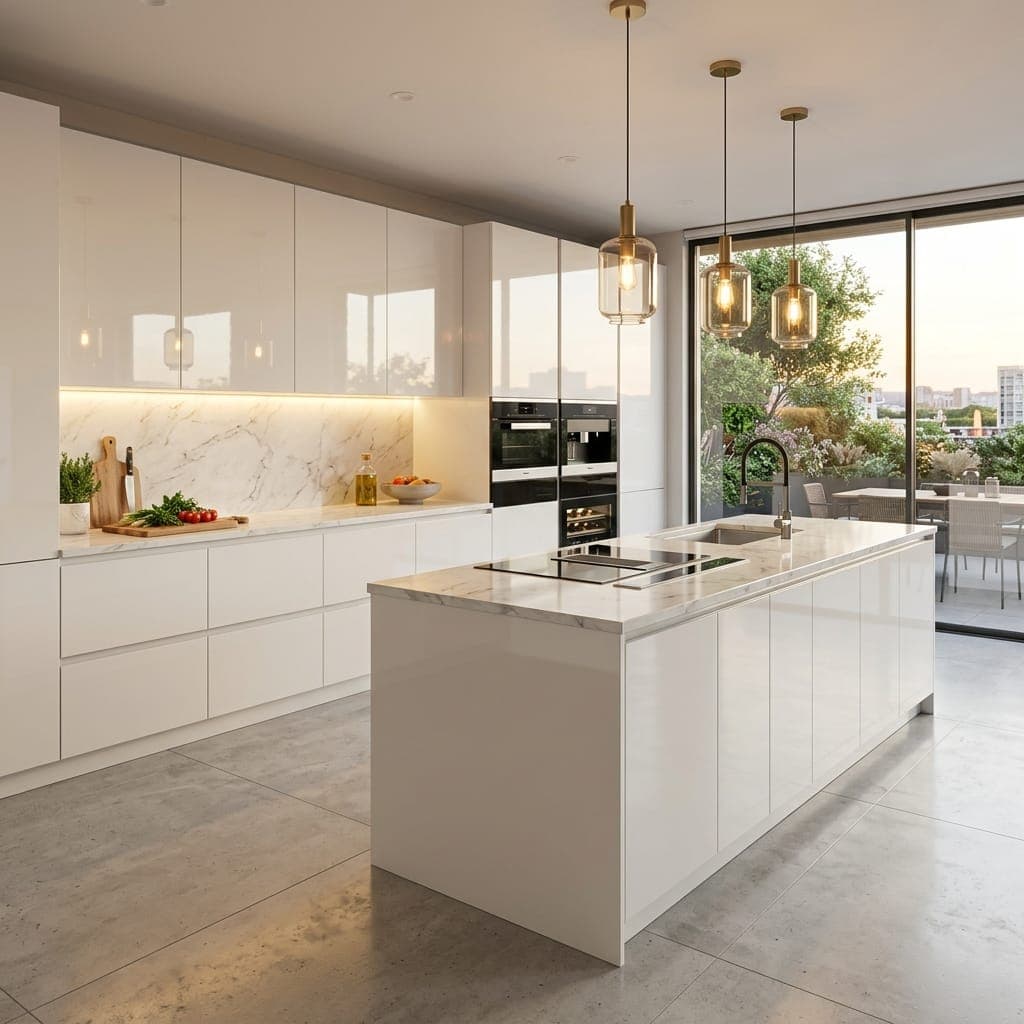
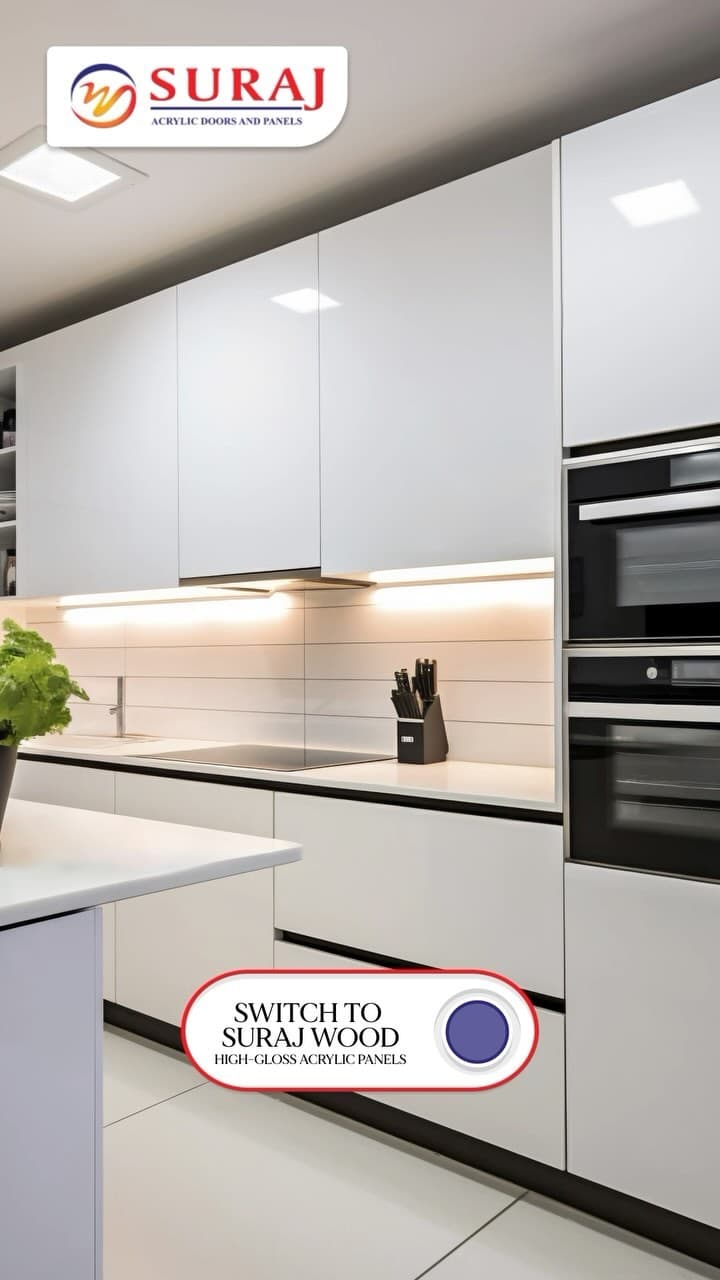
| SW-101 | Arctic White | ACRYLUX High Gloss | Modular Kitchen Overhead Cabinets, Minimalist Island |
| SW-302 | Champagne Metallic | ACRYSILK Pearl Metallic | Master Bedroom Wardrobes, Luxury Dressers |
| SW-408 | Olive Green Matte | ACRYMATTE Anti-Fingerprint | Base Kitchen Cabinets, Contemporary Crockery Units |
| SW-501 | Burnt Copper | ACRYGLASS Crystal Gloss | Living Room Accent Walls, Backlit TV Units |
| SW-705 | Graphite Velvet Glass | ACRYGLASS MATTE | Corporate Conference Desks, Premium Bathroom Vanities |
| PS-004 | Reed Green Matte | Membrane Shutters | Classic Shaker-Style Shutters, Fluted Vanity Doors |
Architectural Design Ideas & Spatial Applications
SurajWood panels seamlessly integrate into every corner of the modern home:
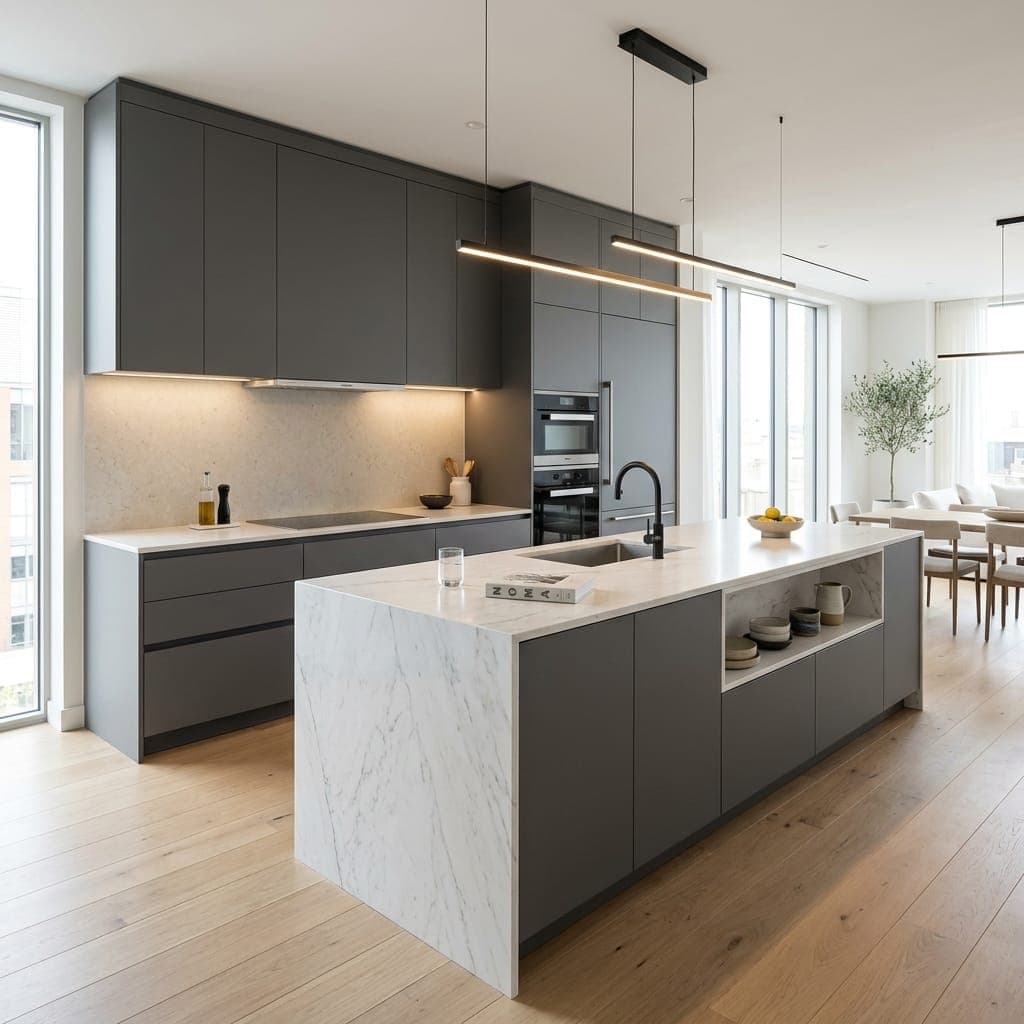
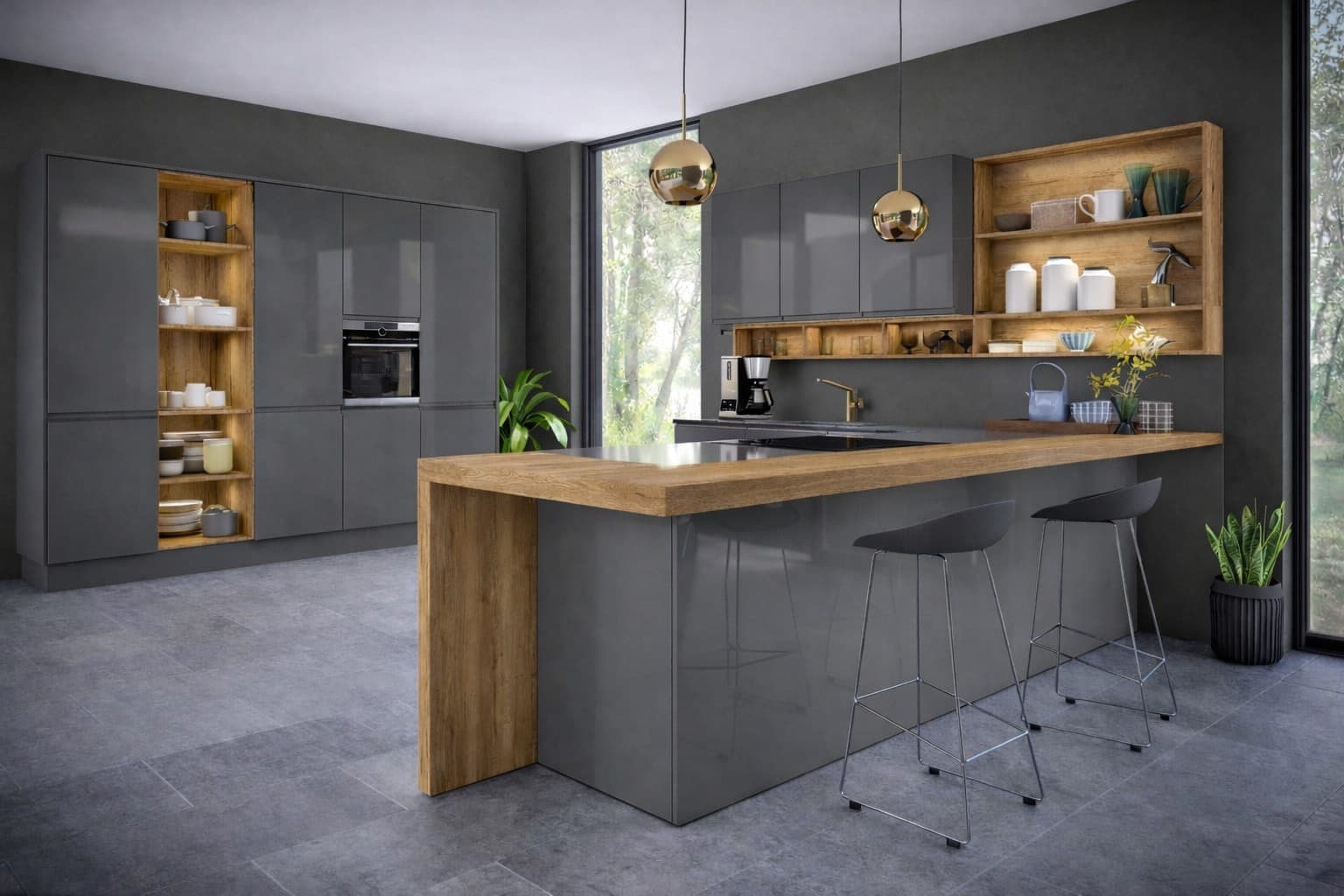
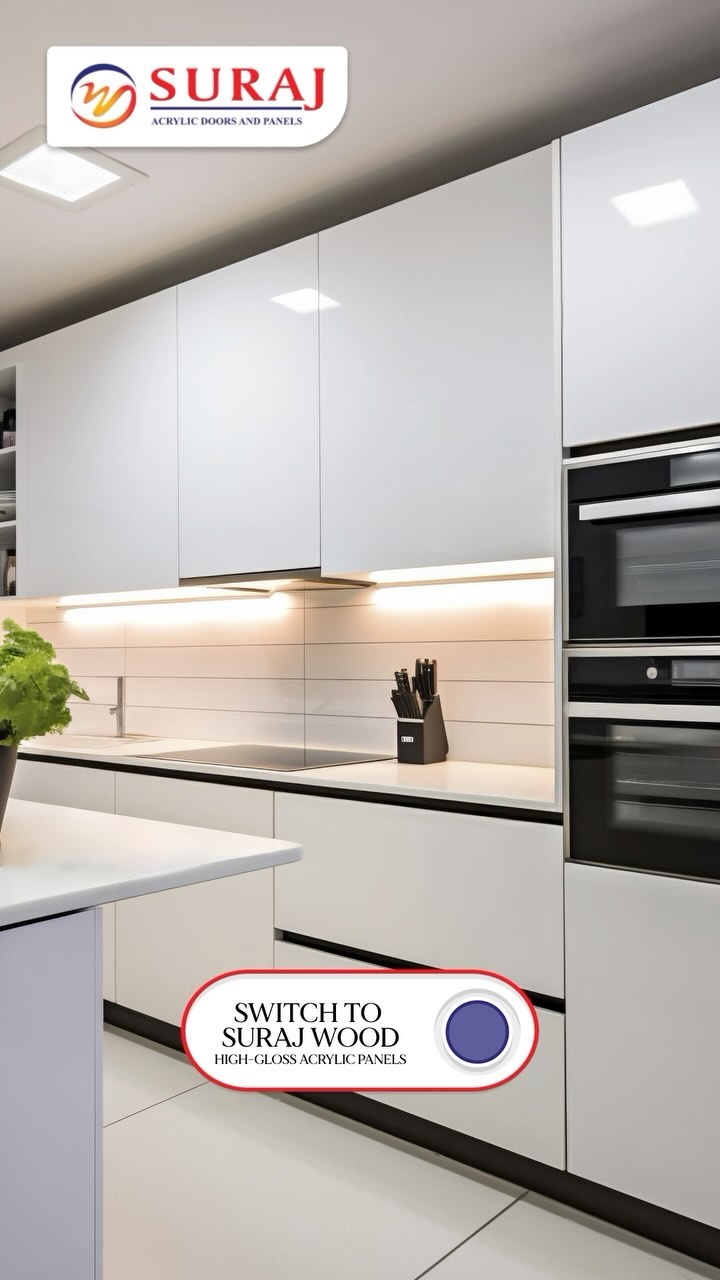
- Modular Kitchen Cabinets: Create dynamic two-tone kitchens by pairing ACRYLUX Arctic White on upper overheads with ACRYMATTE Charcoal or Olive Green on base drawers.
- Floor-to-Ceiling Wardrobes: Achieve uninterrupted elegance with 9ft tall seamless acrylic sliding doors fitted with integrated anodised aluminium handle profiles.
- Living Room Feature Walls: Install ACRYGLASS 2mm panels with concealed LED backlighting for a boutique hotel aesthetic.
Explore SurajWood Surface Collections & Technical Resources
Whether you are designing a high-traffic modular kitchen, bespoke sliding wardrobe shutters, or luxury commercial interiors, SurajWood provides end-to-end engineered surface solutions:
- ACRYLUX High Gloss Acrylic — 100% optical-grade PMMA with 3H scratch resistance and mirror-like depth.
- ACRYMATTE Super Matte — Zero-gloss, anti-fingerprint thermal healing technology for smudge-free modern spaces.
- ACRYSILK Metallic Pearl — Deep metallic pigments infused into seamless optical acrylic.
- ACRYGLASS 2mm Glass Finish — Real glass brilliance and reflective depth without the heavy weight or breakage risk.
- ACRYGLASS MATTE — Sophisticated satin glass reflection with extreme UV and chemical resistance.
- Seamless Membrane Shutters — 3D CNC grooved, Shaker-style, and J-pull shutters with zero edge-banding seams.
- Aluminium Handle Profiles — Precision anodised Gola profiles, integrated J-pulls, and glass shutter frames.
- Modular Kitchen Solutions | Wardrobe Shutter Systems | Living Room & TV Feature Walls
- Request a Free Sample Kit | Download 2026 Digital Catalog & E-Book